
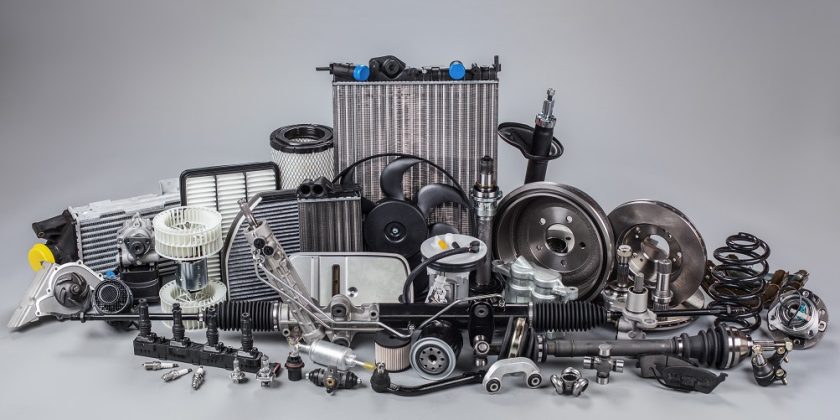
Vehicle Parts Barriers Risk Driving Up Repair Costs
The Australian Automotive Aftermarket Association (AAAA) is calling on the Australian Government to examine anti-competitive practices that restrict the use of safe replacement vehicle parts, warning that emerging barriers risk driving up repair costs and limiting consumer choice.
The call follows renewed public focus on rising vehicle repair costs, including recent calls from the Insurance Council of Australia highlighting how restrictions on replacement parts and parts pairing can reduce competition, extend repair times and increase repair costs.
AAAA Chief Executive Officer Stuart Charity said that while the recent review of the Motor Vehicle Information Sharing Scheme (MVIS) did not extend to parts access, it is becoming increasingly clear that parts-related restrictions deserve closer government attention.
“The Australian Government has rightly recognised that competition in vehicle repair and servicing delivers better outcomes for motorists. The same principle should apply to replacement parts.
“Motorists should be able to choose safe, fit-for-purpose replacement parts without unnecessary technological or commercial barriers preventing their use.”
Mr Charity said one emerging issue is “parts pairing”, where vehicle software can prevent or restrict legitimate replacement parts from functioning unless they have been digitally authorised by the vehicle manufacturer.
“Parts pairing and other manufacturer-controlled restrictions on replacement parts, software and vehicle functionality can effectively tie consumers to authorised repair networks, reducing competition, increasing repair costs and limiting consumer choice.
“Many high-quality aftermarket parts are manufactured by the same companies that supply original equipment components. Often, the only difference is the branding on the box.
“If a quality replacement part meets the required specifications, consumers should not face artificial restrictions that remove their ability to choose where and how their vehicle is repaired.”
Mr Charity said the Government’s review of Australia’s Right to Repair framework presents an opportunity to begin examining parts access as the next frontier of competition reform.
“The MVIS review has appropriately focused on repair information, diagnostics and software access. The next conversation should be whether consumers and independent repairers are being prevented from using safe, equivalent replacement parts through parts pairing, digital lockouts or other manufacturer-controlled systems.
“If manufacturers can use software or digital authorisation to restrict legitimate replacement parts, many of the competitive gains achieved through the Motor Vehicle Information Sharing Scheme risk being undermined.
“This is fundamentally a competition and productivity issue. When consumers have genuine choice, repair markets become more competitive and repairs become more affordable.”
AAAA looks forward to working with government, insurers, vehicle manufacturers, consumer groups and the broader automotive industry to ensure Australia’s Right to Repair framework continues to evolve alongside rapidly changing vehicle technology.