
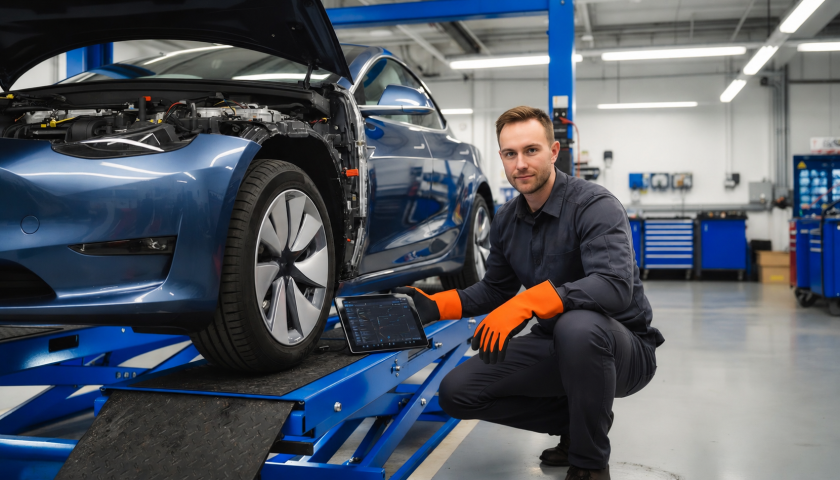
Automotive Workforce Report Reinforces Need For Practical, Common-Sense EV Licensing
The Australian Automotive Aftermarket Association (AAAA) says the release of AUSMASA’s Workforce Insights Report 2026 reinforces the need for practical, risk-based approaches to electric vehicle skills and licensing, at a critical time for the future automotive workforce.
The report highlights the major transition underway across the automotive sector, with electrification, digital diagnostics, advanced driver assistance systems and changing consumer expectations reshaping the skills needed in modern workshops.
AAAA Director of Government Relations and Advocacy, Lesley Yates, said the report provides a useful evidence base for policy discussions at a critical time for the industry.
“This report comes at exactly the right moment,” Ms Yates said. “Safety matters, and technicians need the right skills to work on modern vehicles. But the policy response must be sensible, proportionate, and grounded in the actual tasks being performed in workshops.
“The worst outcome would be a blanket licensing model that treats all EV work as carrying the same level of risk. That would not improve safety — it would simply make it harder for skilled automotive technicians to do their work, harder for workshops to invest, and harder for consumers to access affordable service and repair.”
The report notes that EV licensing can either become a productivity enabler or a skills bottleneck, depending on how it is designed. AAAA supports a nationally consistent, task-based approach that distinguishes routine service work and high-risk, high-voltage battery work.
“Most work on an EV does not involve direct contact with high-voltage components,” Ms Yates said. “A technician changing tyres, servicing brakes, replacing suspension components or carrying out routine diagnostic tasks should not be captured by the same licensing requirements as someone opening or repairing a high-voltage battery pack.
“We need regulation that protects safety without locking capable technicians out of work they are already trained and competent to perform.”
Ms Yates said poorly designed licensing would disproportionately affect smaller independent workshops, where technicians often perform a broader range of tasks.
“Large businesses may have the scale to allocate EV work to specialist streams, but smaller workshops need practical pathways that reflect real workshop conditions. If licensing is too broad or inconsistent across jurisdictions, it will create unnecessary costs, reduce repair capacity and undermine consumer choice.”
AAAA said the report also highlights the importance of Recognition of Prior Learning as part of the workforce solution.
“There is a lot of existing capability in this industry — we have experienced technicians, mature-age workers, skilled migrants, semi-skilled workers and people returning to the workforce who may already have valuable practical skills. A better, more consistent approach to Recognition of Prior Learning would help bring those people through the system faster and more fairly.
“Apprenticeships remain essential, but they are not the only answer. The industry needs multiple entry points and flexible pathways if we are serious about building the workforce Australia needs.”
AAAA also welcomed the report’s focus on workforce participation, including the need to improve gender diversity across the automotive sector.
“Women remain under-represented in automotive, particularly in repair and maintenance,” Ms Yates said. “That is not just a diversity issue — it is a workforce issue. At a time when the industry needs more skilled people, we cannot afford to overlook half the population.
“Improving pathways for women, supporting career changers, recognising existing skills and making technical roles more visible and accessible must all be part of the solution.”
Ms Yates said the transition to EVs and new vehicle technologies should be seen as an opportunity for the aftermarket, provided policy settings support rather than restrict industry capability.
“The independent aftermarket has adapted to every major technology shift in the vehicle parc,” she said. “But we need governments to work with industry on practical, evidence-based policy that supports safety, productivity and consumer choice.”
“The key message from this report is clear: the workforce system must keep pace with changing vehicle technology. That means common-sense EV licensing, better recognition of existing skills, more inclusive workforce pathways and regulation that reflects how modern workshops actually operate.”
AAAA CEO Stuart Charity said governments must ensure new licensing frameworks support both safety and industry capability.
“Other governments should examine this report closely and ensure their approaches are practical, proportionate and nationally consistent,” Mr Charity said.
“As the vehicle fleet changes, governments must work with industry to build skills and maintain safe repair pathways — not rush into regulatory models that may unintentionally make the problem worse.”