
NSW EV Repair Rules Must Regulate The Risk — Not The Vehicle
The Australian Automotive Aftermarket Association (AAAA) is urging the NSW Government to rethink its proposed approach to electric vehicle repair licensing and adopt a genuinely risk-based framework that reflects how modern workshops operate.
In a submission to NSW Fair Trading, AAAA says none of the three reform options currently proposed should proceed in their present form.
AAAA Director of Government Relations & Advocacy Lesley Yates said the central problem is that the proposed reforms still treat an electric vehicle as if every task performed on it carries the same level of risk.
“Changing a tyre, replacing a cabin filter or working on a conventional suspension component does not suddenly become high-voltage work because the vehicle happens to be electric,” Ms Yates said.
“We absolutely support appropriate EV training and we want technicians working around these vehicles to understand the risks. But the qualification has to match the work being done.
“Our message to NSW is simple: regulate the risk, not the propulsion system.”
AAAA has proposed a tiered model that distinguishes between ordinary work that does not interact with a vehicle’s high-voltage system, work that requires depowering or electrical isolation, and direct high-voltage diagnosis and repair.
The Association also warns that NSW risks moving too quickly to prescribe existing qualifications before properly mapping the skills required for different EV tasks.
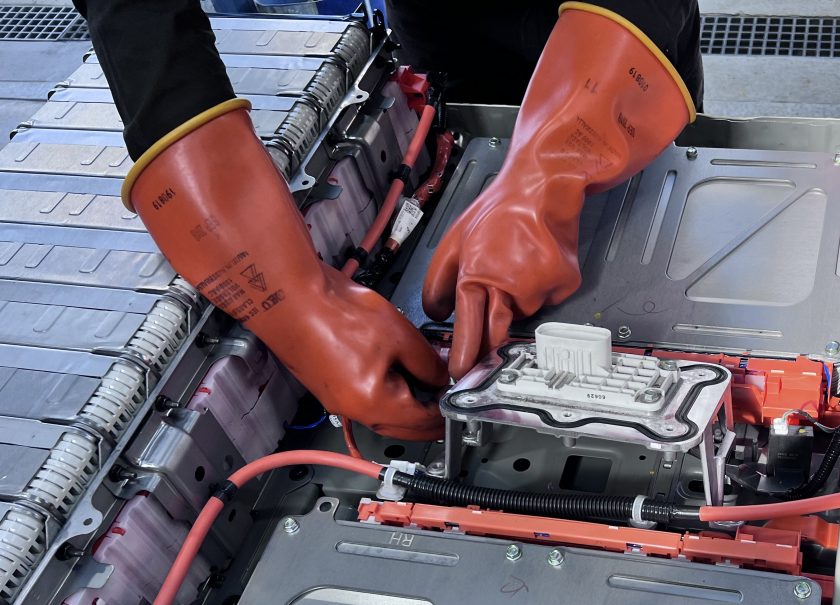
Of particular concern is the proposed treatment of battery work.
The NSW discussion paper appears to contemplate the AURSS00064 Battery Electric Vehicle Inspection and Servicing Skill Set as a pathway to a broad range of high-risk work, including rechargeable energy storage systems.
AAAA says a much clearer distinction is needed between inspection and servicing, high-voltage diagnosis, component replacement, complete battery removal and internal battery repair.
“There is a real danger here of over-qualifying people doing routine work while at the same time under-qualifying genuinely specialist battery work,” Ms Yates said.
“Internal battery repair is not routine workshop work. NSW needs to be very careful not to assume that the closest available qualification is automatically the right qualification for every task.”
AAAA says detailed skills and risk mapping should occur before NSW finalises repair classes or mandated qualifications. It has also urged the State Government to engage with national work already underway through AUSMASA, which is the appropriate body for reviewing EV training products and battery-related competency pathways.
The submission also criticises the drawn-out and fragmented nature of the reform process, which has been under development in various forms for several years.
AAAA says the uncertainty matters because workshops are already making significant decisions about training, equipment, workshop layout, recruitment and future service offerings.
“Workshops are investing now,” Ms Yates said.
“They need to know what skills their staff will require, what work they will legally be allowed to perform and whether the rules are going to change again before those investments have even paid for themselves.
“Clarity has to come before the transition clock starts.”
AAAA has also called for greater transparency around the role of commercial training providers in the consultation process, noting that some participants may derive fee-for-service revenue from training that becomes mandatory under the final regulatory model.
The Association stressed that training providers have valuable expertise, but said regulatory requirements should be driven by identified risks and competencies, not by the existence of a particular training product.
AAAA represents the largest concentration of independent workshops servicing, repairing or preparing to service EVs of any automotive industry association in Australia. Its members are already investing in specialised equipment, staff training, workshop procedures and access to technical information.
“Our members are not resisting EV training, quite the opposite,” Ms Yates said.
“They are investing heavily in it. What they want is a system that is practical, proportionate and technically sound.
“NSW has moved in the right direction by recognising that not all EV work carries the same risk. Now it needs to finish the job.”
You can read AAAA’s full submission – HERE