
Right To Repair Compliance Must Begin On Day One: AAAA
The Australian Automotive Aftermarket Association (AAAA), Australia’s leading advocate for Right to Repair, has welcomed ACCC action that has substantially improved independent repairers’ access to service and repair information.
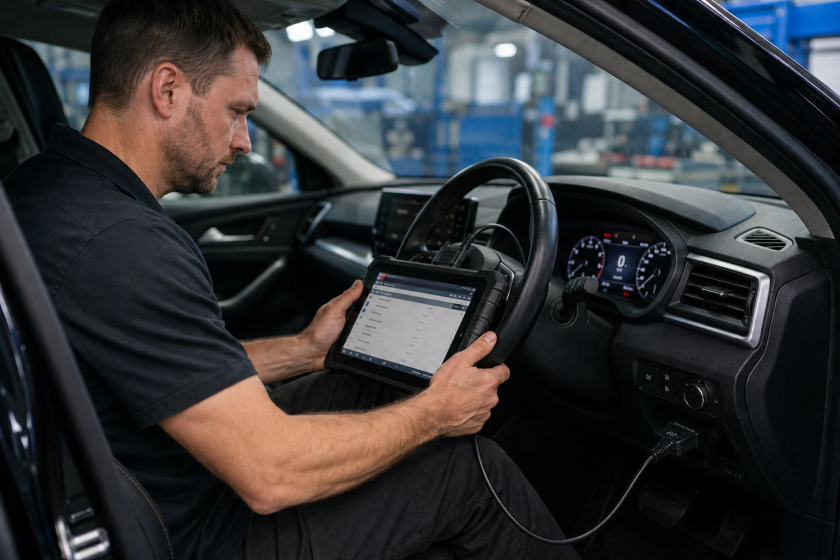
Following separate ACCC investigations, Mazda, Kia and BYD have changed how independent repairers can access diagnostic hardware, software and technical information under Australia’s Motor Vehicle Service and Repair Information Sharing Scheme (MVIS).
AAAA Chief Executive Officer Stuart Charity said the outcome demonstrated why the Association fought for more than a decade to secure Australia’s mandatory Right to Repair law—and why effective enforcement and a stronger, future-ready scheme remain essential.
“A legal right is only meaningful when independent repairers can use it in practice,” Mr Charity said.
“We will continue fighting to ensure the scheme is enforced, strengthened and kept up to date as vehicle technology changes.”
Mr Charity said the investigations sent a clear message to every vehicle manufacturer operating in Australia.
“If you sell cars in Australia, compliance with our Right to Repair law must be built into your operations from day one,” Mr Charity said.
“The law is not an optional extra to be addressed only when the regulator comes knocking. Independent repairers should not have to identify access failures and wait for intervention before receiving information the law already guarantees.”
Following the ACCC investigation, Kia introduced daily access to its diagnostic hardware and software for $136, replacing a previous minimum upfront cost of approximately $9,780.
BYD introduced daily access for $140. Previously, repairers had to pay $600 for monthly access or $14,719.60 to purchase the equipment outright.
Mazda has enabled repairers to access certain diagnostic information through commonly used devices, rather than requiring a specific Mazda device. It is also offering refunds to some repairers who paid more than they would have if an alternative option had been available.
All three manufacturers changed their subscription offers after the ACCC found they were not fully meeting requirements to provide access across periods including daily and monthly options.
“Information is not genuinely accessible if a workshop must spend thousands of dollars on manufacturer-specific equipment or commit to an excessive subscription,” Mr Charity said.
“Access must be practical, timely and offered on fair commercial terms. These changes remove significant barriers for independent workshops and give motorists greater freedom to choose who services and repairs their vehicles.”
Mr Charity said the improvements were meaningful but should not have required three separate investigations.
“Manufacturers know the rules. They must establish compliant systems before their vehicles enter the Australian market—not retrofit compliance after repairers encounter problems,” Mr Charity said.
Mr Charity congratulated the ACCC for pursuing the investigations and acknowledged the Australian Automotive Service and Repair Authority’s (AASRA) important role as the Scheme’s day-to-day adviser.
“Strong enforcement is essential. Without it, repairers can be locked out through excessive costs, restrictive subscription models or proprietary hardware requirements,” Mr Charity said.
“The ACCC’s work has converted the legal right of access into practical improvements for repairers and consumers.”
The outcome also underscores the importance of the Australian Government’s current review of the Scheme and the need to keep pace with changing vehicle technology, remote diagnostics, telematics and information intermediaries.
“Securing Australia’s Right to Repair law was not the end of the campaign,” Mr Charity said.
“We continue to advocate for a scheme that delivers genuine access across the repair ecosystem and evolves with the vehicles on Australian roads.
“Fair access supports competition, protects consumer choice and ensures Australia’s independent workshops can continue servicing the nation’s increasingly complex vehicle fleet.”
The AAAA encourages independent repairers experiencing difficulties accessing manufacturer service and repair information to report the issue to AASRA.