
Rapid Transformation of Vehicle Technology Drives Global Right To Repair Efforts
The rapid transformation of vehicle technology is creating a new frontier for Right to Repair, as connected, electric and increasingly automated vehicles change how faults are diagnosed, parts are replaced and repairs are completed.
The Australian Automotive Aftermarket Association (AAAA) says Australia’s Right to Repair framework must continue to evolve as advanced driver assistance systems (ADAS), electric vehicles, telematics and automated driving systems become increasingly common across the national vehicle fleet.
The global nature of these challenges was a major focus of the recent Right to Repair Global Meeting held at Automechanika Frankfurt. AAAA Chief Executive Officer Stuart Charity and Director of Government Relations and Advocacy Lesley Yates represented Australia at the meeting, which brought together automotive aftermarket associations from Europe, North and South America, Africa, Asia and Oceania.
Delegates reported that although Right to Repair laws and campaigns differ between countries, the same technology-related barriers are emerging across markets. A dedicated technology and data access session examined telematics, parts pairing, software-controlled functions, electrification and connectivity, and what independent workshops will need to remain competitive.
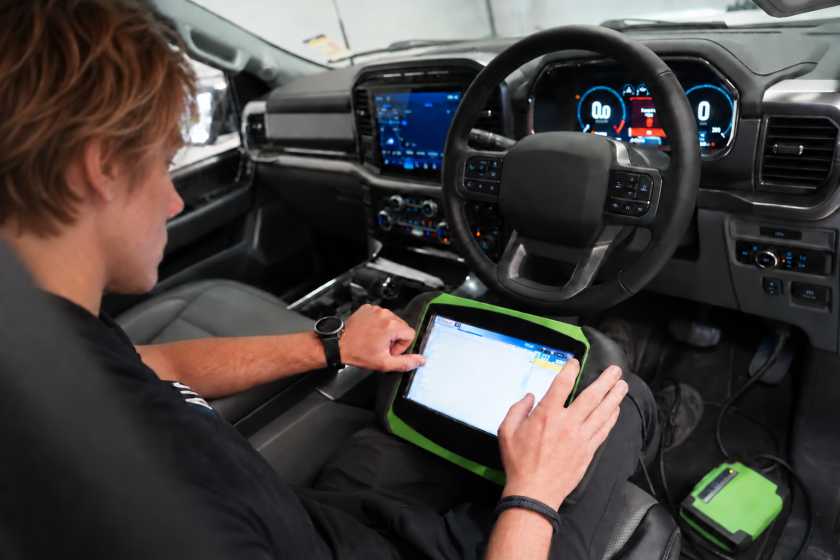
Modern vehicle repair now depends on much more than access to a workshop manual. Independent repairers need practical, affordable and timely access to repair-critical vehicle data, software functions, security codes, digital service histories, calibration procedures.
Emerging barriers include parts pairing, where a legitimate replacement component may not function without manufacturer authorisation, and digital gateways that can restrict access to diagnostic or calibration functions.
Connected vehicles also generate real-time telematics data that is increasingly important for identifying faults, planning maintenance and completing repairs, but this data sits outside Australia’s current Motor Vehicle Information Sharing Scheme (MVIS).
Access through intermediaries such as data aggregators, scan-tool and diagnostic-platform providers and tool manufacturers is also essential. These businesses convert manufacturer information and vehicle data into the practical tools used by thousands of Australian workshops.
Ms Yates said the issue was not about resisting new technology, but ensuring its benefits did not come at the expense of consumer choice and fair competition.
“Australia has a world-leading foundation through MVIS, but vehicles are evolving quickly and our Right to Repair protections must keep pace.”
“ADAS, EVs, connected vehicles and automated driving systems bring significant benefits, but they also create new points of control over data, software and parts. If independent repairers are locked out, consumers lose choice and competition is weakened.
“Motorists should be able to authorise secure access to their vehicle’s repair and maintenance data by the qualified repairer they trust. Privacy, cybersecurity and Right to Repair can and must work together.”
Meeting participants also shared developments ranging from awareness campaigns and coalition building to legislative proposals, regulatory reviews and enforcement action. The discussion reinforced the need for effective rules that deliver repair access in practice, not simply in principle.
Ms Yates said international cooperation would become increasingly important as vehicle platforms and technology-related repair restrictions cross national borders.
“These are global challenges, and Australia benefits from working closely with organisations confronting the same issues in other markets.
“By sharing evidence, policy experience and practical solutions, the global Right to Repair community can support innovation while protecting consumer choice, fair competition and the future of independent automotive repair.”